

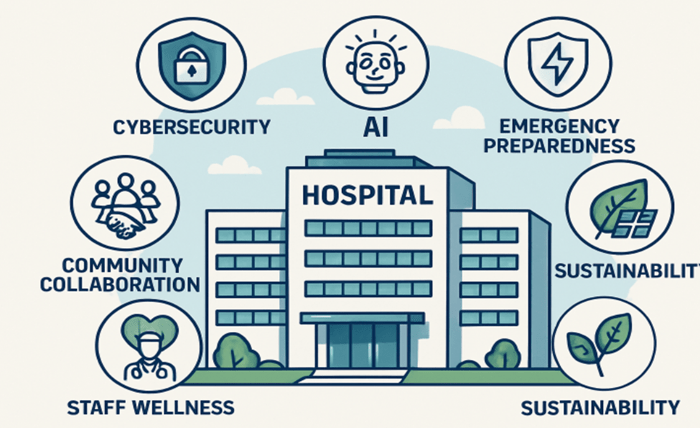
In an age of unprecedented change, hospitals must address both longstanding and emerging risks. From the surge in cyber threats to the unpredictable impact of climate change, healthcare institutions are reevaluating every aspect of their operations. Enhanced preparedness isn’t just a regulatory requirement—it’s central to delivering safe and sustainable care. As the environment grows more complex, hospital leaders recognize the need for protective solutions, including professional liability insurance, to safeguard patients, staff, and organizational stability as they navigate modern risks.
Not only must hospitals safeguard patient information against increasing cyberattacks, but they must also contend with rapidly advancing medical technology, more resilient disaster planning, and the impacts of community health factors. This multidimensional approach is shaping a new era of readiness and resilience across the healthcare sector, as organizations seek to address every stage of risk—from prevention and detection to response and recovery.
Cutting-edge digital systems, forward-thinking partnerships, and rigorous staff support are enabling hospitals to take proactive steps, as both internal and external threats to healthcare quality become increasingly sophisticated. In this climate, collaboration, innovation, and strong leadership are essential for adapting to the evolving demands of healthcare delivery.
Healthcare organizations are increasingly turning to authoritative resources and industry best practices shared by major healthcare publications to inform and refine their strategies in this challenging environment. For a broader context, the American Hospital Association provides insights into nationwide developments in hospital risk management.
Strengthening Cybersecurity Measures
Cybersecurity remains a top priority for hospitals, as a single breach can endanger both patients’ personal data and the institution’s reputation. Recent proposals from the Biden administration aim to standardize cybersecurity requirements, mandating regular penetration testing and the implementation of robust encryption. While these steps help build digital resilience, they can be burdensome for under-resourced health systems that lack IT support and budget flexibility. As healthcare continues to shift further into the digital realm with interconnected medical devices and patient portals, the attack surface expands. Hospitals are increasingly adopting zero-trust models, investing in real-time monitoring, and providing ongoing cybersecurity training for staff to reduce the likelihood of human error leading to breaches.
Integrating Advanced Technologies
The advent of artificial intelligence (AI), machine learning, and cloud-based solutions is making hospital processes more efficient and enhancing patient care. AI-driven predictions can help forecast patient admission surges, optimizing resource allocation and surgical scheduling. Internet of Things (IoT) devices, such as wearable health monitors, enable real-time remote patient monitoring and share critical updates with clinicians. Furthermore, digital voice assistants are streamlining clinical documentation, sparing doctors and nurses time-consuming paperwork and allowing them to focus on what matters most—direct patient care. Hospitals adopting advanced analytics benefit from powerful insights that drive operational efficiency and improve clinical outcomes.
Enhancing Emergency Preparedness
With climate change causing more frequent and severe weather events and human-made threats becoming increasingly unpredictable, hospital emergency planning has become both more comprehensive and urgent. Facilities are upgrading their physical infrastructure to withstand disasters, incorporating redundancies for power, water, and medical supplies, and building flexible care spaces that can be adapted for mass casualty or public health emergencies. Drills and scenario-based training, now including both active shooter and ransomware attack scenarios, foster preparedness at every organizational level. Partnerships with public agencies and local suppliers ensure rapid access to critical resources, including personal protective equipment (PPE), in times of crisis.
Fostering Community Collaboration
Hospitals are expanding beyond their walls to address social determinants of health, partnering with food banks, housing organizations, and local governments. By supporting mobile clinics, school-based health education initiatives, and access to wellness services, they help prevent chronic conditions and reduce avoidable ER visits. Such partnerships foster trust, enhance health literacy, and ensure more equitable access to care for underserved populations, ultimately leading to improved long-term outcomes across entire regions.
Investing in Staff Wellness
The well-being of hospital staff is closely tied to the quality of care delivered. Recognizing burnout and mental fatigue as serious risks, hospitals are redesigning schedules to minimize excessive overtime, providing on-site well-being resources such as mindfulness and resilience training, and offering support for mental health. Institutional culture is shifting toward open discussion and peer recognition, fostering a workplace environment where staff feel valued and supported. This, in turn, leads to better patient outcomes, stronger retention, and more resilient healthcare teams.
Implementing Sustainable Practices
Sustainability initiatives in hospitals encompass a range of areas, from operational efficiency to community health. Smart buildings—equipped with sensors and guided by real-time data—optimize climate control and electricity usage, leading to a significant reduction in energy consumption. Many hospitals are now pursuing zero-waste goals, enhancing their recycling programs, and implementing green technologies, such as solar power. Sustainable procurement and smarter resource management reduce costs, shrink the hospital’s carbon footprint, and model environmental stewardship for the broader community. These efforts are supported by documented case studies shared through leading environmental and health publications.
Conclusion
Hospitals are facing an increasingly complex risk environment characterized by digital threats, new regulatory requirements, unpredictable disasters, and evolving models of care. Through robust cybersecurity, technology integration, comprehensive emergency preparedness, community engagement, staff support, and sustainability practices, they are rising to meet these challenges. The pursuit of resilience and adaptability lies at the heart of modern healthcare, setting the foundation for safer, more equitable, and higher-quality patient care into the future.