

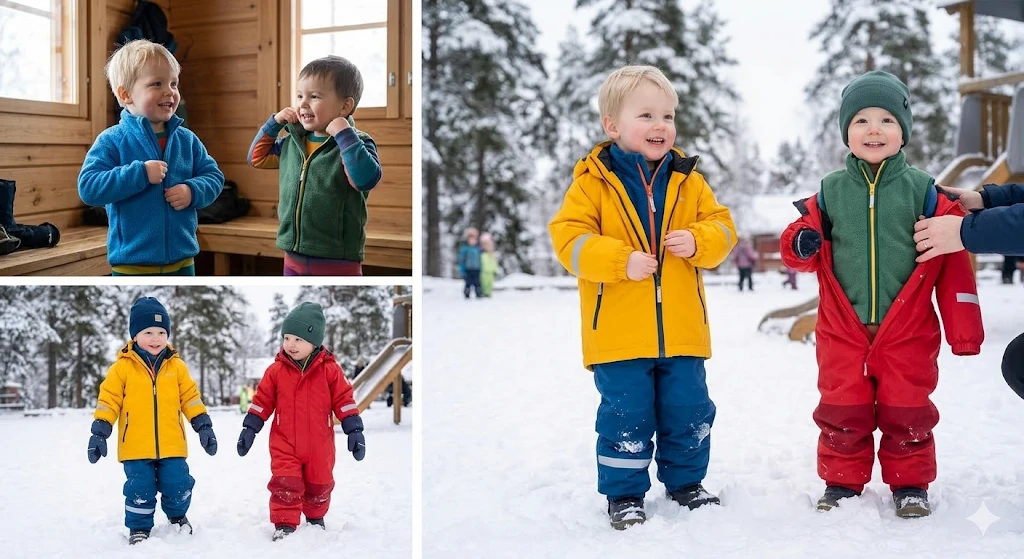
It is a common sight in winter: a child bundled in a huge, heavy parka, shuffling across the playground, unable to lift their arms to throw a snowball. While the parka is undoubtedly warm, it often traps too much heat during active play, leading to sweating, discomfort, and eventually, cooling when the activity stops.
Ask any outdoor enthusiast, and they will tell you that the true secret to staying warm is not a single giant coat, but the art of layering. This system provides flexibility and efficiency that a single bulky item cannot match. For children whose bodies struggle to regulate temperature, mastering this approach is essential for enjoying extended winter play.
Decoding the Layering System
The layering system is divided into three distinct parts, each with a specific job:
- The Base Layer (The Moisture Manager): This layer sits directly against the skin. Its job is to wick sweat (moisture) away from the body so it can escape. Never use cotton for a base layer; cotton absorbs moisture and holds it against the skin, making the child feel clammy and cold. Choose synthetic blends, merino wool, or bamboo that you can find in Reima base layers page.
- The Mid-Layer (The Insulator): This is where many parents make critical errors. The mid-layer’s job is to trap the body’s natural heat while still allowing moisture to move outward. A cotton hoodie is heavy and provides minimal insulation when damp. Instead, select a lightweight Reima fleece jacket or pullover. Fleece is an ideal insulator; it is incredibly warm for its weight, dries rapidly, and remains effective even when slightly damp. It provides structured warmth without restricting the child’s arm movement under a winter jacket.
- The Outer Shell (The Weather Protector): This layer’s job is to block wind and repel snow and rain. It is a durable, waterproof barrier. The key is to ensure the shell is breathable so the moisture wicking from the base and moving through the mid-layer can escape to the atmosphere.
The Practical Application
Layering allows your child to regulate their own temperature, a skill they should be taught from a young age. On a highly active day (like sledding or running), they might remove the outer shell while maintaining the fleece and base layer for warmth. Conversely, on a cold, windy lift ride between ski runs, they will appreciate all three layers sealed tight.
Making It Simple for Families
Mastering the winter layering system doesn’t need to be complicated or break the bank. For your key insulating pieces, look for quality fabrics Reima fleece to wear under a reliable, breathable outer shell. Once you optimize those base and mid-layers, outdoor playtime naturally extends, and you’ll hear far fewer complaints about the temperature. Ultimately, you’re equipping your kids with exactly what they need to stay active and comfortable all day.