


Understanding the number of players on a soccer team and their respective roles is fundamental to appreciating the game. Soccer, known as football outside of North America, is the world’s most popular sport, enjoyed by millions of players and fans globally. In this comprehensive guide, we will delve into the specifics of how many players are on a soccer team, the roles they play, variations for different levels and formats of the game, and the essential rules that govern player numbers. By the end of this article, you will have a thorough understanding of the structure of soccer teams and how this impacts the game.
How Many Players on a Soccer Team?

Standard 11-a-Side Soccer
In a standard soccer match, each team fields 11 players, including one goalkeeper and ten outfield players. This is the format used in professional, collegiate, and high school soccer matches. The 11 players on the field are typically arranged in various formations depending on the team’s strategy and the coach’s tactics.
Breakdown of the 11 Players:
- Goalkeeper (GK)
- Defenders: Usually four players, including two center-backs, a left-back, and a right-back.
- Midfielders: Typically three to five players, including central midfielders, attacking midfielders, and defensive midfielders.
- Forwards: Usually two to three players, including strikers and wingers.
Variations in Player Numbers
While 11-a-side is the standard for professional matches, soccer is played in various formats with different numbers of players, especially at youth and amateur levels.
Small-Sided Games
- 5-a-Side: Popular in indoor soccer and youth leagues, featuring four outfield players and one goalkeeper.
- 7-a-Side: Common in youth soccer, with six outfield players and one goalkeeper.
- 9-a-Side: Often used as a transition format for youth players moving to full-sized pitches, with eight outfield players and one goalkeeper.
Futsal
- 5-a-Side: A variant of soccer played on a smaller, indoor pitch. Teams consist of four outfield players and one goalkeeper.
Roles and Responsibilities of Soccer Players
Understanding the roles and responsibilities of each player on a soccer team helps appreciate the complexity and strategy involved in the game.
Goalkeeper
The goalkeeper, often referred to as the goalie, is the last line of defense and the only player allowed to use their hands within the penalty area. Their primary responsibilities include:
- Stopping shots on goal.
- Organizing the defense.
- Distributing the ball to start attacks.
Defenders
Defenders are primarily responsible for stopping the opposing team from scoring. They play close to their own goal and are divided into different roles:
- Center-Backs: Central defenders who focus on blocking attacks and winning aerial duels.
- Full-Backs: Defenders on the flanks who also support offensive play.
- Wing-Backs: A more offensive version of full-backs, often involved in attacking plays.
Midfielders
Midfielders are versatile players who connect the defense and the attack. Their roles vary based on their position:
- Defensive Midfielders: Protect the defense and break up opposition plays.
- Central Midfielders: Distribute the ball and maintain possession.
- Attacking Midfielders: Support the forwards and create scoring opportunities.
Forwards
Forwards, or strikers, are primarily responsible for scoring goals. They play closest to the opponent’s goal and are divided into:
- Center Forwards: Main goal scorers who play in central attacking positions.
- Wingers: Wide players who use speed and skill to create and score goals from the flanks.
Formations and Strategies
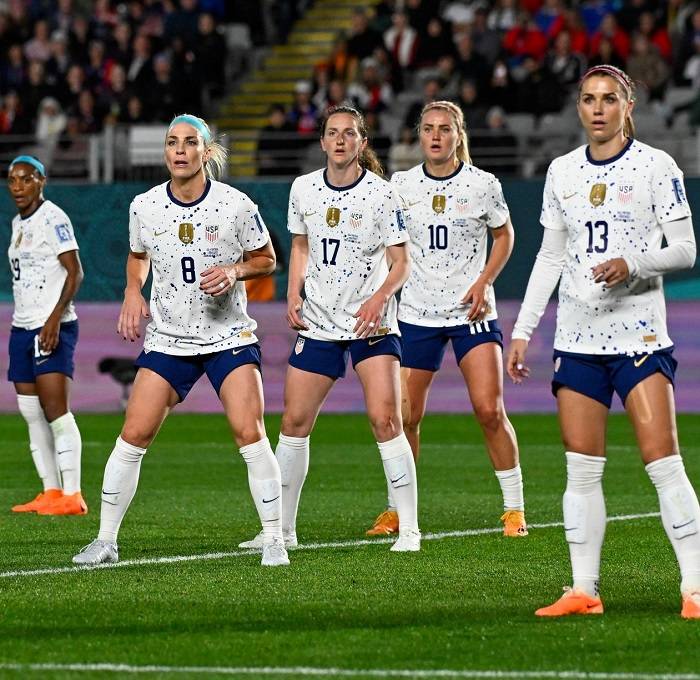
The way the 11 players are arranged on the field, known as the formation, significantly impacts a team’s strategy and style of play. Common formations include:
4-4-2
One of the most traditional formations, featuring:
- Four defenders
- Four midfielders
- Two forwards
4-3-3
A more attacking formation with:
- Four defenders
- Three midfielders
- Three forwards
3-5-2
A balanced formation that uses:
- Three defenders
- Five midfielders (including wing-backs)
- Two forwards
4-2-3-1
A versatile formation focusing on a strong midfield:
- Four defenders
- Two defensive midfielders
- Three attacking midfielders
- One forward
5-3-2
A defensive formation, often used to counter strong offensive teams:
- Five defenders (including wing-backs)
- Three midfielders
- Two forwards
Impact of Player Numbers on the Game
The number of players on a soccer team affects the game’s dynamics, strategy, and flow. Here’s how:
Space and Movement
With 11 players on each team, the full-sized pitch allows for significant space and movement, leading to a strategic battle of positioning and tactics.
Game Pace
Fewer players on smaller pitches, as seen in 5-a-side or futsal, result in a faster-paced game with more touches on the ball and quicker transitions between attack and defense.
Tactical Flexibility
Different numbers of players require different tactical approaches. Smaller teams focus more on individual skills and quick passing, while larger teams emphasize strategic positioning and teamwork.
Youth and Amateur Soccer
Youth and amateur soccer often use modified versions of the game to match players’ developmental stages. These variations help young players learn the game in a more accessible and enjoyable environment.
Benefits of Small-Sided Games
- More Touches: Players get more opportunities to interact with the ball.
- Simplified Tactics: Easier for young players to understand basic positioning and roles.
- Increased Involvement: Every player is more involved in the game, enhancing learning and enjoyment.
Essential Rules Regarding Player Numbers

Several rules govern how many players are on a soccer team, ensuring the game’s fairness and structure.
Minimum Number of Players
According to FIFA rules, a match cannot start or continue if a team has fewer than seven players. This rule ensures that the game remains competitive and fair.
Substitutions
Substitutions allow teams to replace tired or injured players, with specific rules varying by league:
- Professional Leagues: Typically allow three to five substitutions per match.
- Youth and Amateur Leagues: Often have more flexible substitution rules to encourage participation.
Red Cards and Ejections
If a player receives a red card, they are ejected from the game, and their team must continue with one fewer player. This can significantly impact the team’s strategy and chances of success.
Table: Summary of Player Numbers and Formats
| Format | Number of Players | Typical Use |
| 11-a-Side | 11 | Professional, collegiate, high school |
| 9-a-Side | 9 | Youth transition to full-sized pitch |
| 7-a-Side | 7 | Youth soccer |
| 5-a-Side (Indoor) | 5 | Indoor soccer, youth leagues |
| Futsal | 5 | Indoor variant of soccer |
Frequently Asked Questions (FAQs)
1. How many players are on a standard soccer team?
A standard soccer team has 11 players, including one goalkeeper and ten outfield players. This format is used in professional, collegiate, and high school matches.
2. Are there different formats with fewer players?
Yes, soccer is played in various formats with different numbers of players, especially at youth and amateur levels. Common formats include 5-a-side, 7-a-side, and 9-a-side games.
3. What happens if a team has fewer than seven players?
According to FIFA rules, a match cannot start or continue if a team has fewer than seven players. This ensures the game remains competitive and fair.
4. How many substitutions are allowed in a match?
The number of substitutions allowed varies by league. Professional leagues typically allow three to five substitutions per match, while youth and amateur leagues often have more flexible rules.
5. What is the role of the goalkeeper?
The goalkeeper is the last line of defense and the only player allowed to use their hands within the penalty area. Their primary responsibilities include stopping shots, organizing the defense, and distributing the ball to start attacks.
Related Posts:
- 2023 Fantasy Football Team Names: A Comprehensive Guide
- Spain Women’s National Football Team Players: A Comprehensive Guide
- Rate My Fantasy Team: A Comprehensive Guide
Understanding how many players are on a soccer team and their respective roles is fundamental to appreciating the game. Whether you’re watching a professional match or participating in a local league, knowing the structure and rules governing player numbers enhances your enjoyment and understanding of soccer. From the standard 11-a-side format to various small-sided games, the number of players impacts the game’s strategy, pace, and dynamics. By exploring the different roles and formations, we gain a deeper insight into the beautiful game. So, whether you are a player, coach, or fan, this comprehensive guide provides valuable knowledge about the structure and essence of soccer teams.