

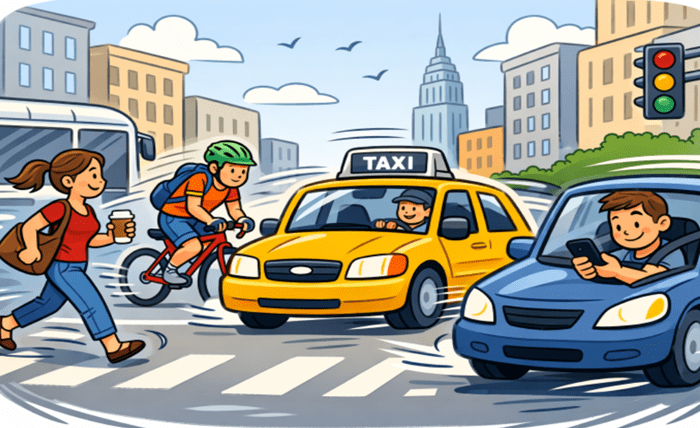
New York City’s streets are alive with constant motion and energy, making it one of the busiest urban environments in the world. With millions of drivers, cyclists, and pedestrians sharing the roads daily, understanding the main reasons car accidents happen in NYC is critical for everyone on the road. If you want more information or require legal support after an accident, visit our website for guidance on your options.
Every year, thousands of vehicle collisions occur in the five boroughs. These incidents can lead to injuries, property damage, and even loss of life, all of which impact local families and communities. Identifying the most significant causes of accidents helps city officials, advocates, and residents make safer choices and supports efforts to improve policies.
Both personal vigilance and strong enforcement are required to address these ongoing transportation challenges. Infrastructure improvements and educational campaigns also play vital roles in making New York City safer for drivers, pedestrians, and cyclists alike. By recognizing the risk factors outlined in this article, drivers can be more proactive in avoiding dangerous situations.
For a broader look at traffic safety and statistics in major U.S. cities, the New York City Department of Transportation’s Vision Zero report provides valuable insights into trends, accident frequencies, and the effectiveness of recent safety initiatives.
Distracted Driving
Distracted driving is one of the most prevalent contributors to car accidents in New York City. Many drivers use their mobile phones, GPS devices, or in-car entertainment while navigating the city’s busy roads. According to the New York City Police Department, over 28,000 vehicle collisions in 2022 were linked to driver distraction or inattention. These distractions can significantly impair reaction times and decision-making, resulting in preventable crashes, injuries, and fatalities. Limiting distractions and adopting hands-free technologies are proven ways to make city driving safer for everyone.
The proliferation of mobile devices has introduced new risks for drivers who may try to read texts or use social media while driving. Even passengers can become a distraction by conversing loudly or by showing the driver their phones or other devices. Public awareness campaigns across NYC have underscored the risks, but it is ultimately up to each driver to commit to focused driving behaviors. By maintaining undivided attention on the road and surroundings, motorists can greatly reduce their chances of being involved in a traffic accident. Ride-sharing services and commercial drivers, in particular, face added pressure to resist distractions while balancing customer communications, highlighting the importance of strict corporate policies and individual responsibility.
Speeding and Aggressive Driving
Driving above posted speed limits and demonstrating aggressive behavior, such as sudden lane changes or tailgating, remains a notable issue in NYC. The city’s high-traffic streets and frequent stop-and-go conditions make these behaviors especially hazardous. In 2022, unsafe speeds were a factor in nearly 4,000 reported vehicle collisions in New York City. Law enforcement agencies have stepped up efforts to conduct speed traps and deploy automated speed cameras, but raising driver awareness about the dangers of speed remains crucial.
New Yorkers are well aware that traffic congestion can lead to frustration and impatience, and this emotional response often manifests as aggressive driving. Some drivers react to minor delays by honking, weaving through lanes, or even engaging in road rage incidents. This aggressive attitude doesn’t just create a hostile environment; it also amplifies the risk of high-impact crashes. Urban planners and policymakers are looking into solutions such as lower default speed limits and expanded red-light camera coverage to combat this trend. Public education remains fundamental to changing attitudes and promoting greater compliance with speed laws, thereby fostering more respectful and safe roadways.
Failure to Yield
Failure to yield the right of way, particularly at intersections and crosswalks, is another major cause of accidents in the city. This issue often endangers pedestrians, cyclists, and other motorists. In 2023, failure to yield was a factor in more than 4,600 traffic crashes across the five boroughs. Strict adherence to traffic signals and an increased focus on pedestrian safety can help curtail these incidents, protecting the most vulnerable road users. For more data on city crash causes, see the comprehensive analysis of contributing factors of traffic crashes in New York City.
Many of New York City’s most dangerous intersections are in high-density areas where crosswalks are frequently ignored or blocked. Pedestrians often find themselves competing with turning vehicles, delivery trucks, or cyclists who rush to beat red lights. City programs like Vision Zero attempt to address these dangerous behaviors by redesigning busy intersections and prioritizing visibility for both drivers and walkers. Yielding at these intersections isn’t just about avoiding traffic tickets; it’s a fundamental responsibility that keeps the city’s vast network of pedestrians and cyclists safe.
Impaired Driving
Despite widespread public awareness campaigns and tough DUI laws, impaired driving due to alcohol or drugs remains a recurring issue in New York City. In 2022, city data shows that nearly 2,000 vehicle collisions involved drivers under the influence. Scientific studies and crash statistics make it clear that any substance that affects coordination, perception, or judgment significantly increases the likelihood of a serious accident. Reducing impaired driving requires ongoing public education and frequent sobriety checkpoints.
Impaired driving extends beyond alcohol, with prescription medications and illicit drugs also impacting drivers’ cognitive and physical abilities. An increasing challenge comes from substances that might not be immediately detected, such as certain opioids or anti-anxiety medications, which can cause drowsiness and delayed reactions. Law enforcement has expanded training to help officers detect a broader range of impairments during roadside checks. Additionally, city agencies regularly partner with hospitals and advocacy groups to deliver educational outreach, helping deter impaired driving before it starts. Community members can also play a role by encouraging safe transportation alternatives, such as taxis or public transit, especially during holidays and weekends when impaired driving spikes.
Poor Road Conditions
Potholes, unreliable road surfaces, confusing signage, and poorly designed intersections all contribute to unsafe driving conditions. Environmental and infrastructural challenges are especially prevalent in the city’s older roadways and on heavily traveled routes like the FDR Drive and Grand Central Parkway, which combined for 1,350 crashes in 2023. Prompt infrastructure repairs and improved urban planning are both needed to address these hazards and keep the city’s population safe.
The constant wear and tear from intense seasonal weather only compounds these issues. Heavy snowfall, freezing cycles, and summer heat all take a toll on asphalt and road paint, quickly creating hazardous driving environments if not regularly maintained. City agencies face challenges keeping up with repairs due to budget constraints and logistical hurdles, leaving drivers to navigate damaged roads or unexpected obstructions often. Public reporting tools now enable New Yorkers to quickly alert city departments to hazardous conditions, creating a feedback loop that, over time, can help prioritize repairs and enhance public safety efforts.
Unlicensed Drivers
A significant portion of accidents and fatalities in New York City involve unlicensed drivers. From 2021 to 2024, they were responsible for roughly 25% of street fatalities, totaling nearly 300 deaths. Unlicensed drivers often lack proper training and may not be adequately insured, increasing the risks for law-abiding drivers and pedestrians. Stronger enforcement and comprehensive policy solutions are necessary to address this challenge.
There are many reasons individuals might drive without a license, including suspensions due to previous infractions, lapsed renewals, or never obtaining a license in the first place. Unlicensed drivers who flee accident scenes complicate authorities’ ability to respond and assist victims. This underscores the ongoing need for improved identification, increased penalties for repeat offenders, and programs that promote accessible driver education. Community outreach and partnerships with local organizations may also help, as they can connect at-risk populations with resources to become properly licensed and insured, further reducing risk on NYC streets.
Conclusion
Understanding the most common causes of car accidents in New York City is a critical step toward reducing traffic-related injuries and fatalities. Drivers, pedestrians, and cyclists can all do their part by staying vigilant and following safety rules. At the same time, city officials, engineers, and advocates should continue to push for safer roadway conditions, better driver education, and targeted enforcement measures. Through collaboration and a collective commitment to safety, New York City’s roads can become safer for everyone.
Car accidents affect more than just the individuals immediately involved; they produce ripple effects that reach families, employers, neighborhoods, and city resources. Building a culture of safety is a long-term effort that relies on regular community engagement and feedback. Consider joining local traffic safety groups or attending public meetings where road safety concerns are discussed. Every positive action, such as reporting a hazardous intersection or encouraging a friend to follow speed limits, helps to shift the broader driving culture toward shared responsibility. As New York City continues to grow and change, integrating safety into everyday practices and public policies will be key for safeguarding the well-being of all who live and travel here.