

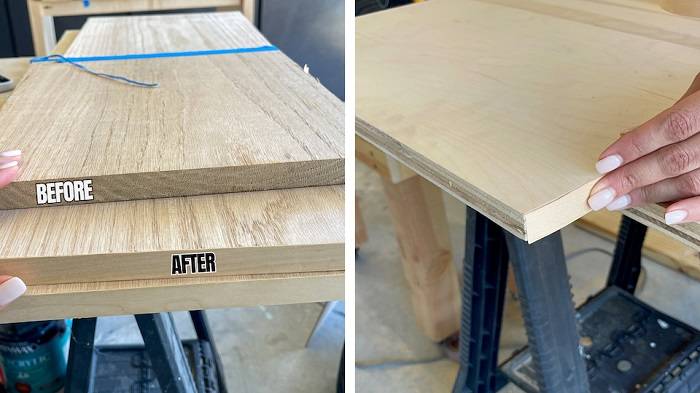
When you build furniture or cabinets with medium-density fiberboard, you quickly realise that the rough, fuzzy edges are the hardest to hide because they soak up paint and glue like a dry sponge. It is common to have a beautiful flat surface, only for the sides to look like a science project gone wrong because the board’s porous core is exposed to the air. Most people try to slap on some paint and hope for the best, but the result is usually a dark and uneven line that makes the whole piece of furniture look like it was made in a hurry. If you want your work to look like it came from a professional shop, you have to take the time to cover those edges with a thin strip of matching material that makes the board look like one solid piece of wood. This simple step is what separates a basic home project from a high-quality piece that you would be proud to show off to your friends and family.
The Logic Of A Clean Edge For A Better Look
A realistic observation about working with these boards is that the amount of time you spend on the prep work will decide how the final corner looks, regardless of how much you spend on the trim. Before you even touch the glue or the iron, sand the edge until it feels as smooth as glass, because any little bump will show through the thin banding later. Many people skip this part and then wonder why the edge looks wavy or why the glue does not hold as well as it should have over time. When you are deciding on materials for a project like this, you might find yourself weighing the debate between MDF vs plywood to see which one provides a better finish for your specific needs. Brands like Advance Laminates offer many surface materials that work well with these boards, and the same rules for clean edges apply whether you are working on a small desk or a large wall feature. This comes up more often than expected when a builder realises that a small gap at the corner can make a huge difference in how the light hits the final product.
Practical Thoughts On The Application Of The Trim
The heat you use to apply the edge tape needs to be just right because too much will melt the material, and too little will leave you with a loose strip. It is a good idea to practice on a few scraps first to get a feel for how fast you should move the iron to achieve a steady, even bond across the whole length. Once the strip is on and the glue has cooled, you are left with a bit of overhang that needs to be trimmed with a very sharp blade or a tool made for this job. You have to be careful not to dig into the main face of the board while you do this because a single slip can ruin the whole panel and force you to start the work all over again. Small repetitions of a light touch with a fine file can help smooth out the corners so they do not feel sharp when you run your hand along the side. You can see similar attention to detail in high-end exterior work, like soffit panels, where every joint must be tight to keep the look clean and professional.
Keeping The Bond Strong For A Long Time
The final step is to check for any tiny air bubbles or spots where the glue did not take hold, as these are where the banding will start to fail first. A quick rub with a smooth block of wood, while the material is still slightly warm, can help push out any trapped air and make the bond much stronger. It is also helpful to keep the humidity in your work area at a normal level, as sudden changes in humidity can cause the wood to expand and contract, putting a lot of stress on the glue line. If you take the time to do these small steps, you will find that your finished project looks much more like a solid piece of timber than a collection of flat boards glued together. It is all about the little details that most people do not notice until they are missing or done poorly.